


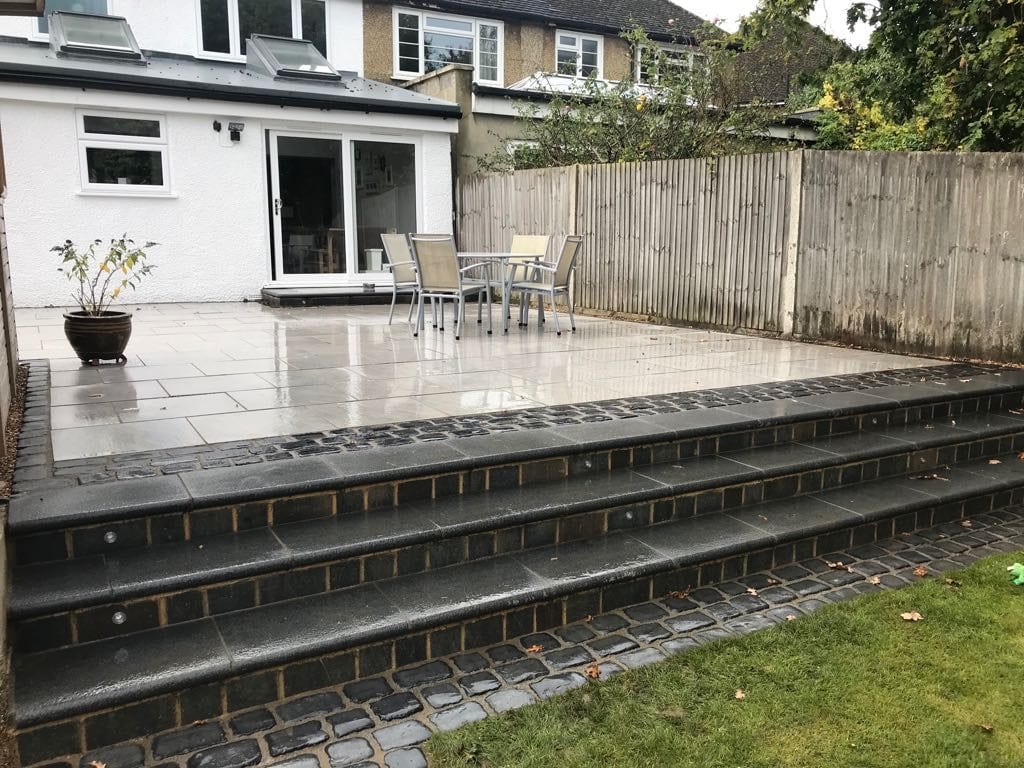
If you are planning a new patio, you may have questions such as which material to choose, what factors influence the
cost, how long it will take, and whether you need planning permission. Most homeowners end up with more questions than
they began with, and most of the factors that determine a patio’s success or failure are set before the first slab is
laid.
This is a complete, practical guide to patio construction services in the UK, where you will find information about
porcelain, sandstone, and block paving; the factors that affect the cost of a patio installation; an overview of the
entire installation process, from excavation to jointing; some rules about drainage; and what to do if you have an
awkward or sloped garden. It also features a comparison of patios with decking and artificial grass, so you will
understand where each option is actually appropriate. Use it as a working reference before you start asking patio
contractors for quotes.
What Is Patio Construction
Patio construction is the process of building a level, hard-paved outdoor area over a properly excavated, compacted
base, not simply slabs on soil. A lasting patio needs excavation, a compacted sub-base, correct drainage falls, and
skilled jointing.
What are the main stages of patio construction?
Every project follows the same stages: design, excavation, sub-base preparation, laying the paving, and jointing. Skip
or rush one, and problems show up within a few years, such as cracked slabs, pooling water, or weeds in the joints.
How is a patio different from a path or driveway?
A patio carries less weight than a driveway, so it needs a shallower sub-base, but it still needs solid drainage.
Benefits of Building a Patio
A well-built garden patio adds usable outdoor space, raises property value, and needs far less upkeep than a lawn or
decking once it’s laid correctly.
Added space for activities
A well-built patio adds an outdoor usable space to your home. This added space can be used to host family gatherings or
celebrations.
Does a patio add value to a property?
Buyers consistently rate outdoor space as a feature that makes a home stand out, and a well-designed patio extends your
living space without the cost of a full extension.
Is a patio low-maintenance
Once laid correctly, paving doesn’t rot, warp or need annual staining like timber decking. A regular sweep and an
occasional clean keep it looking sharp.
Patio Materials Guide
The three most common materials used in patio construction UK are porcelain, sandstone, and block paving, each suited to
a different budget, look, and maintenance level.
- Porcelain paving
Porcelain is dense, non-porous, and highly resistant to staining and fading, making it the best option for a
low-maintenance finish. It is more expensive but holds its colour with almost no regular care and maintenance. - Sandstone and natural stone
Sandstone adds warmth and natural variation, from smooth slabs to riven finishes. More porous than porcelain, so
it’s best used when sealed and works great in shaded spots. - Block paving
Installers lay block paving in individual units, which are easy to lift and replace if a section is damaged,
which is a
low-cost option for a patio that connects to a driveway.
Here’s a closer look at patio materials:
| Material | Look | Maintenance | Relative Cost | Best For |
| Porcelain | Sleek, modern | Very low | Higher | Modern homes, low upkeep |
| Sandstone | Natural, textured | Low-medium | Mid-range | Traditional, cottage-style gardens |
| Block paving | Versatile | Low | Budget-friendly | Matching an existing driveway |
How Much Does a Patio Cost?
The patio installation cost is not fixed; it varies depending on several factors.
What affects the patio costs?
- Size and complexity: A larger or customised layout requires more material and labour, ultimately
increasing costs. - Materials used: Each material has its own price range; for example, porcelain is more expensive,
sandstone is mid-range, and block paving is less expensive. - Site preparation: Excavation, levelling, grading, garden access, and other preparations for patio
installation also add to the overall cost.
How do I get an accurate quote?
The best way to know your cost is to visit the site and request a written quotation. A specialist contractor will check
ground conditions before providing a definitive quote.
Patio Design Ideas & Styles
The best patio design depends on your garden’s shape, your house style, and how you plan to use the space, whether it is
a simple single-level seating area or a multi-level patio with raised beds and retaining walls.
- Traditional and Contemporary layouts
Brick and natural stone are perfect for period homes, while large-format porcelain in neutral tones is best for
modern extensions. - What are good small garden patio ideas?
If you have a small garden area but use large-format material, it is best to use a single-level patio, as there
will
be fewer joints, giving a longer sightline. Inbuilt seating serves as storage or a planting area. - Multi-level and raised patios
Gardens with a change in level often work better as two connected patios linked by shallow steps, rather than
one flat
space cut into a slope.
The Patio Construction Process, Step by Step
The process of a professional patio build has five stages and typically takes 5 days to 2 weeks.
- Design and consultation
The contractor assesses the garden’s size, explains the materials, and creates a CAD drawing showing what the
final
garden will look like before work begins. - Preparation and excavation
The team digs the ground to the proper depth and removes the turf, soil or old paving. - Sub-base and drainage
Installers lay down a compacted stone sub-base with a slight fall to move rainwater away from the house. - Laying the paving
All slabs are installed on one full bed of fresh mortar, preventing rocking and cracking and far exceeding the
life
of a dry-laid patio. - Jointing and finishing
The team completes the joints, cleans the edges and tests the area drains before giving it over.
Drainage & Regulations
Most rear and side garden patios don’t need planning permission regardless of size, but front garden hard surfacing over
5 square metres must be permeable or drain to a permeable area.
Do I need planning permission for a patio?
In most cases, no. The main exceptions are listed buildings, conservation areas, and properties subject to an Article 4
Direction, so check with your council to see whether these apply.
SuDS and permeable paving rules
The 5m2 rule applies only to front gardens. Exceed it with non-permeable paving; it then requires permeable jointing, a
soakaway, or planning permission.
Patio vs Decking vs Artificial Grass
Patio paving will last longer and require less maintenance than decking or artificial grass. Still, decking works better
on uneven surfaces, and artificial grass works better on playfields than paving does.
| Feature | Patio Paving | Decking | Artificial Grass |
| Lifespan | 20+ years | 10-15 years | 8-15 years |
| Maintenance | Very low | Regular repair | Low, occasional brushing |
| Best for | Seating, dining | Raised areas | Play areas, lawns |
When is the cheapest: patio, decking, or artificial grass?
Artificial grass and basic decking are usually the lower-cost options upfront. Over 20 years, though, a well-built patio
often works out more affordable overall since it doesn’t need replacing halfway through.
When is decking or artificial grass a better choice?
Decking suits uneven ground, where a timber frame avoids heavy excavation. Artificial grass suits play areas and
pet-friendly gardens.
How Long Does a Patio Last? Maintenance & Aftercare
A well-built patio with the correct sub-base and drainage falls lasts 20 years or more with very little maintenance.
Poor groundwork, not the paving material, is the main reason patios fail early.
How do I keep a patio looking its best?
Sweep it regularly, give it a proper clean once or twice a year, and repoint joints if they start to wear.
What are the signs a patio needs attention?
Watch for standing water after rain, rocking slabs, cracks or weeds growing in joints. These are the signs of a problem
with the base or drainage, not the surface.
Common Patio Construction Mistakes to Avoid
The most common mistakes are using the wrong material for the setting, insufficient sub-base, and neglecting drainage
falls, all of which reduce the lifespan of a good-looking patio on day one.
- Choosing the wrong material
Durability depends on the material being appropriate for the site. A stone with a lot of porosity in a wet
corner or
a soft stone in a high-traffic zone will wear out more quickly than other stones. - Compromising on the sub-base
A patio’s quality depends almost entirely on what’s underneath it. A thin, poorly compacted sub-base is
invisible
once the paving goes down, but it’s the biggest cause of early failure. - Ignoring drainage falls
Without a proper fall directing water away from the house, a patio collects standing water after rain, leaving a
slippery surface that gets worse over time.
How to Choose a Patio Contractor
Before work begins, look for patio contractors or patio builders who have trade accreditations, a portfolio of local
work, a written guarantee, and a written quote. Membership of a recognised trade body is a good indicator of
professional and reliable training.
What questions should I ask before hiring?
Ask how long the company has been trading, whether they offer a written guarantee, what sub-base depth they use, and
whether the quote includes a CAD drawing.
What accreditations and guarantees should I look for?
Check on Checkatrade for trade body membership, manufacturer accreditations and authentic reviews. A patio company that
doesn’t take the final payment until you are satisfied provides actual financial coverage.
Real Patio Projects
A real-life project experience is one of the most obvious ways a patio company can prove its worth and not deliver a
good price.
What does professional patio work look like in practice?
D Plumbridge has been installing patios and driveways in Sutton and the surrounding Surrey area since 1989 as a
family-run business. The experts are certified by Checkatrade, Interlay, Marshalls, Brett, and Bradstone, and have won
industry awards, including the Brett Approved Installer Awards, making them one of the top patio construction companies
in the UK, known to local homeowners.
Why is local relevance and accreditation important?
A contractor who is familiar with the local environment will know the characteristics of the soil, drainage patterns,
and planning concerns unique to your postcode, and accreditation means that the materials and installation are to a
recognised standard.
Faqs
What are the guidelines for the construction of a patio in the UK?
Generally, a ground-level garden patio at the rear or side will not require planning permission, but raised platforms
are subject to different rules – check with your local planning council.
What is the best material for a patio in the UK?
Porcelain will give a low-maintenance, modern style; sandstone will give a natural texture and be a mid-range option,
while block paving is a very inexpensive, DIY-friendly option.
What are common patio laying mistakes?
The most important thing to get right is to ensure a drainage fall; wet weather causes water to stagnate, and winter
makes it slippery.
What is the lifespan of a professionally constructed patio?
With correct excavation, a solid sub-base, and correct drainage, the patio should last 20 years or more.
Conclusion
Patio construction is one of the more cost-efficient ways to increase the amount of usable space on a home. The material
is important, whether it’s easy to maintain porcelain or sandstone for a warmer surface or block paving, which is more
affordable, but what goes beneath is just as important. If you get the excavation, sub-base and drainage correct, any of
these materials will be satisfactory for many years.
When hiring for patio construction services, make sure you look around for quotes and ensure they have the proper
accreditations.
Looking to design a new patio? Contact D Plumridge, a trusted, top-rated, family-run patio installation team based in Sutton, Surrey, for a no-cost, no-obligation site inspection and a free quote.